ENGINEERED WOOD FLOORS
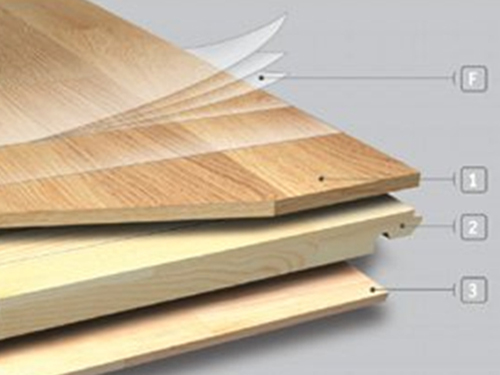
The diagram below shows the typical construction of a 14mm engineered wood floor. Wooden
floors come typically designed with either a locking system which does not require
glues, or tongue and groove which is glued together. Professional fitters typically
prefer a glue system for most applications.
Engineered wood flooring has a 3 layered construction. A solid wood top layer, a core
layer made up of strips of wood and single piece stabilizing base layer. These types of
products are normally available in various formats from 10mm through to 15mm and with
top layers from 2.5mm -4mm of hardwood. The boards are tongue and grooved all round and
have micro bevels on the long sides only.
Engineered wood floors can be nailed (20mm only), glued down or floated.
Underfloor Heating.
An engineered floor is ideal for use over underfloor heating. A locking system is
recommended.
Multifloor or Semi Solid Wooden Flooring
Now commonly referred to as engineered floors, they are manufactured in a completely way
to engineered 14/15mm floors, and are not engineered to the same tolerances. This range
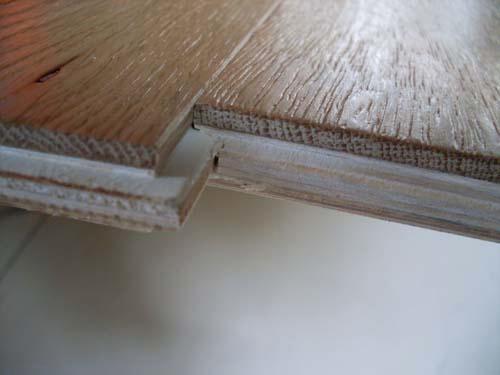
of flooring is a 2 layered construction made up of plywood and wood veneer. The wood
veneers can be anything between 02.5mm and 6mm , and the plywood anywhere between
10-15mm. The boards are tongue and grooved all round and can have micro bevels all the
way round or on the long sides only.
Multi-floor products can be fitted as nailed down floors where the subfloor is either
existing floor boards or plywood, or they can be glued down to screeds or chipboard
using an appropriate parket adhesive. We would always recommend using MS Polymer
adhesive.
Multi-floor products are not suitable for a floating installation. The tongue and groove on these boards is not sufficiently well engineered to support a floating installation. If you want to float a floor you should always choose the engineered products.
Underfloor Heating.
Glue down only. Not suitable for electric system.
Solid Wooden Flooring
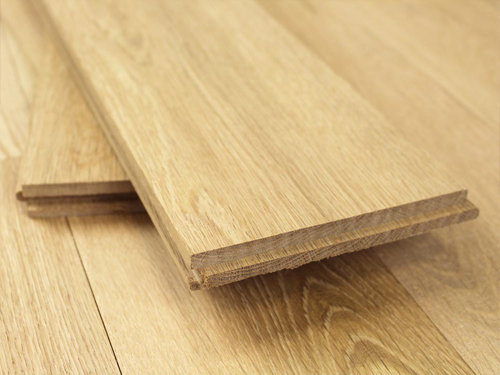
Solid wooden flooring is a single piece of hardwood or softwood top to bottom. The boards are tongued and grooved all round and will have micro bevels on the long sides if they are supplied pre finished. Otherwise they will be square edged boards which will need to be sanded and finished on site.
The best way to fit a solid wooden flooring is by secret nailing and according to British Standards by surface fixing if the boards are over 130mm wide. Nailing should always be the preferred method of fixing but when necessary you could also glue down a solid hardwood floor. Solid floors cannot be floated as there is too much movement in a solid floor and the machining of the tongue and groove does not support this type of installation.
Underfloor Heating.
Solid wooden floors are not suitable for use with underfloor heating.